Original: $27.96
-65%$27.96
$9.79The Story
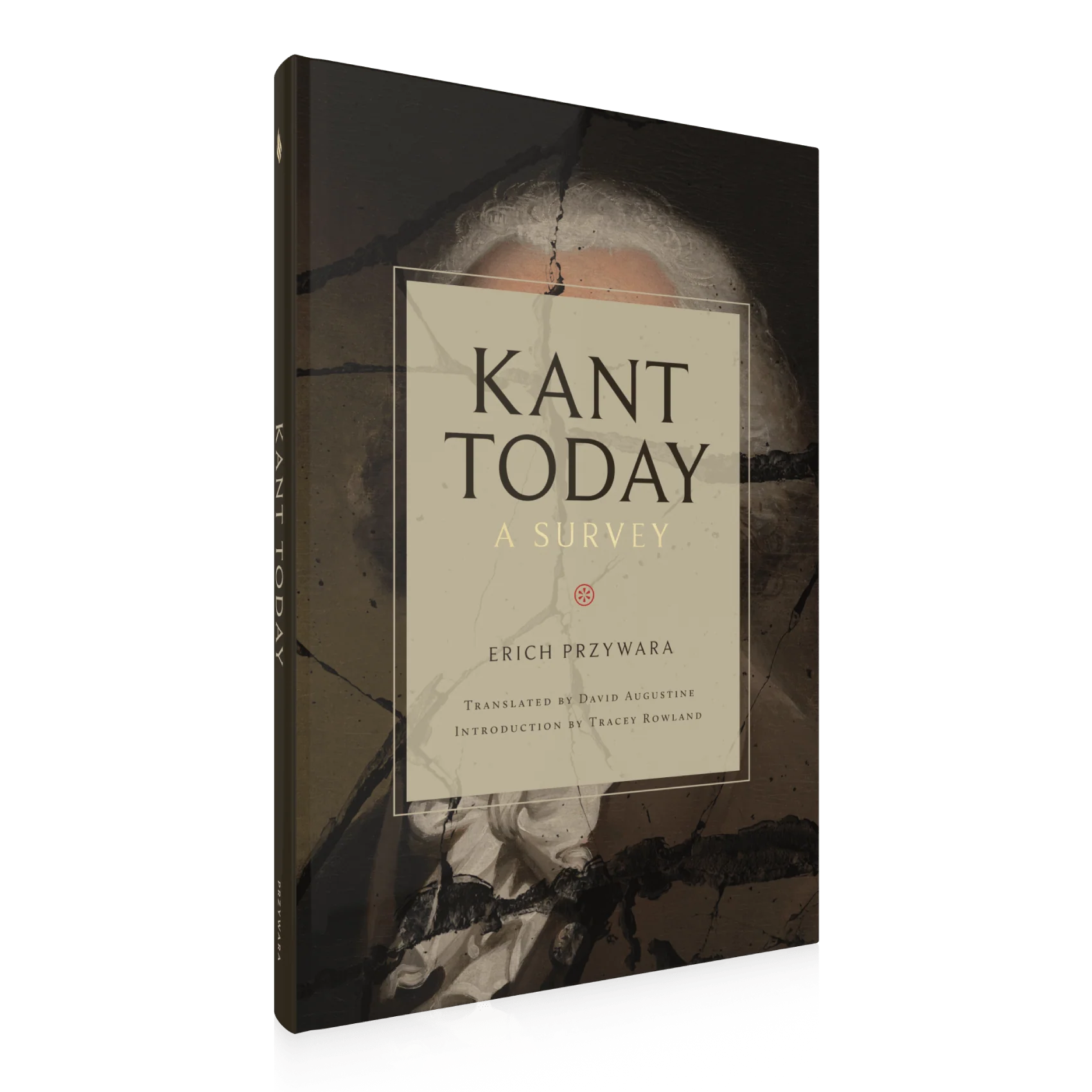
In Kant Today: A Survey, Erich Przywara explores the enduring impact of the tensions inherent in Immanuel Kant’s thought on continental philosophy over nearly a century and a half. Drawing parallels to the efforts at synthesis of Thomas Aquinas, Przywara presents Kant as a thinker striving to reconcile disparate currents of contemporary thought. While Aquinas fused neo-Platonic Augustinian philosophy with the neo-Aristotelianism of the Parisian Arts Faculty, Kant sought to harmonize continental idealism with the skepticism and empiricism exemplified by a British thinker like David Hume.
Aquinas’s synthesis maintained coherence due to his reliance on the analogia entis. In contrast, Kant’s synthesis lacked such a unifying principle, leading to the proliferation of philosophical antitheses reverberating throughout nineteenth- and early-twentieth-century Europe. Kant Today chronicles the aftermath of Kant’s tumultuous synthesis and suggests that the resolution may lie in a thinker capable of uniting Augustine’s fervent pursuit of God with Aquinas’s distinctive epistemological equilibrium—namely, John Henry Newman.
Details & Craftsmanship
Every detail has been carefully considered to bring you the perfect product.
Details & Craftsmanship
Every detail has been carefully considered to bring you the perfect product.
Details & Craftsmanship
Every detail has been carefully considered to bring you the perfect product.
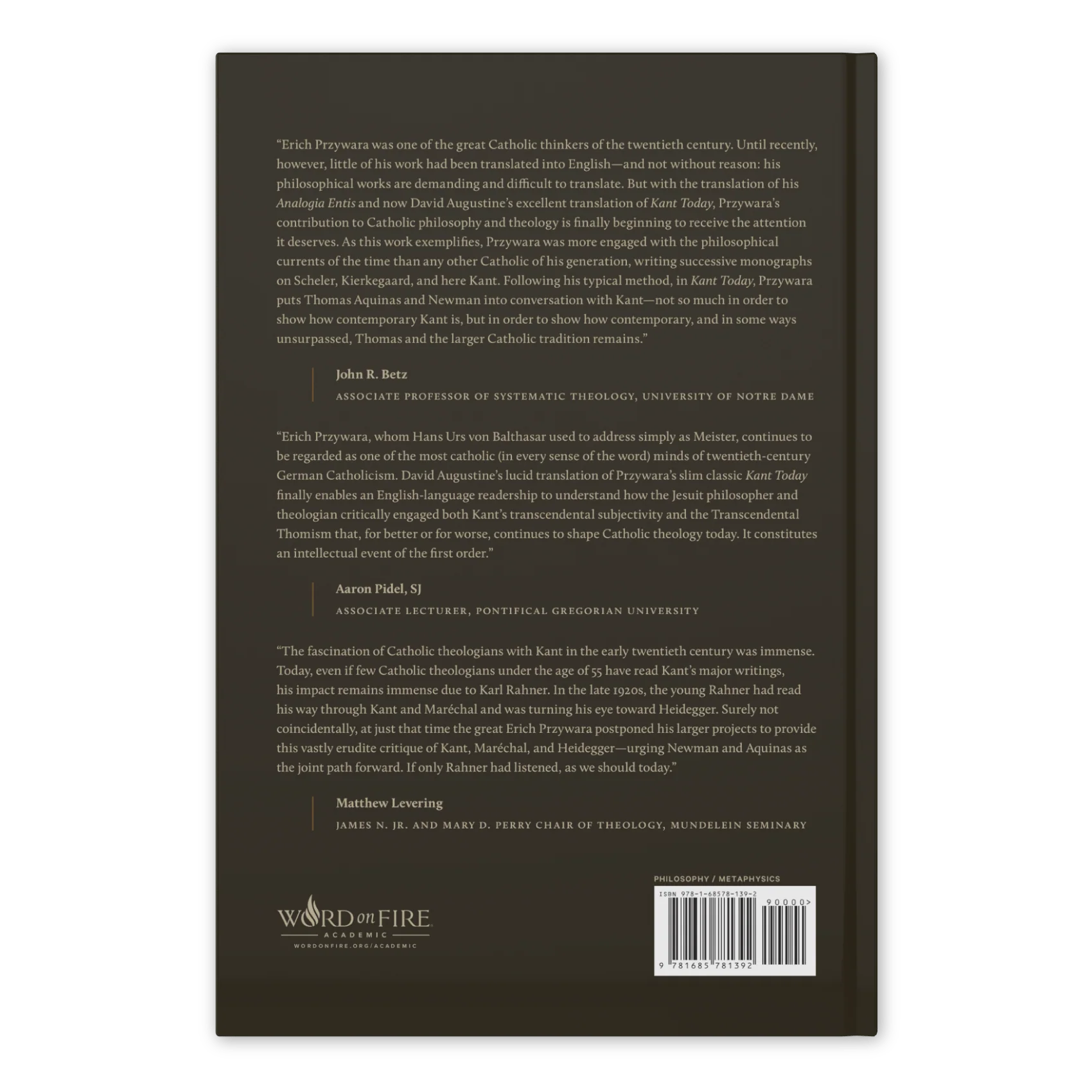
Details & Craftsmanship
Every detail has been carefully considered to bring you the perfect product.
Description
In Kant Today: A Survey, Erich Przywara explores the enduring impact of the tensions inherent in Immanuel Kant’s thought on continental philosophy over nearly a century and a half. Drawing parallels to the efforts at synthesis of Thomas Aquinas, Przywara presents Kant as a thinker striving to reconcile disparate currents of contemporary thought. While Aquinas fused neo-Platonic Augustinian philosophy with the neo-Aristotelianism of the Parisian Arts Faculty, Kant sought to harmonize continental idealism with the skepticism and empiricism exemplified by a British thinker like David Hume.
Aquinas’s synthesis maintained coherence due to his reliance on the analogia entis. In contrast, Kant’s synthesis lacked such a unifying principle, leading to the proliferation of philosophical antitheses reverberating throughout nineteenth- and early-twentieth-century Europe. Kant Today chronicles the aftermath of Kant’s tumultuous synthesis and suggests that the resolution may lie in a thinker capable of uniting Augustine’s fervent pursuit of God with Aquinas’s distinctive epistemological equilibrium—namely, John Henry Newman.